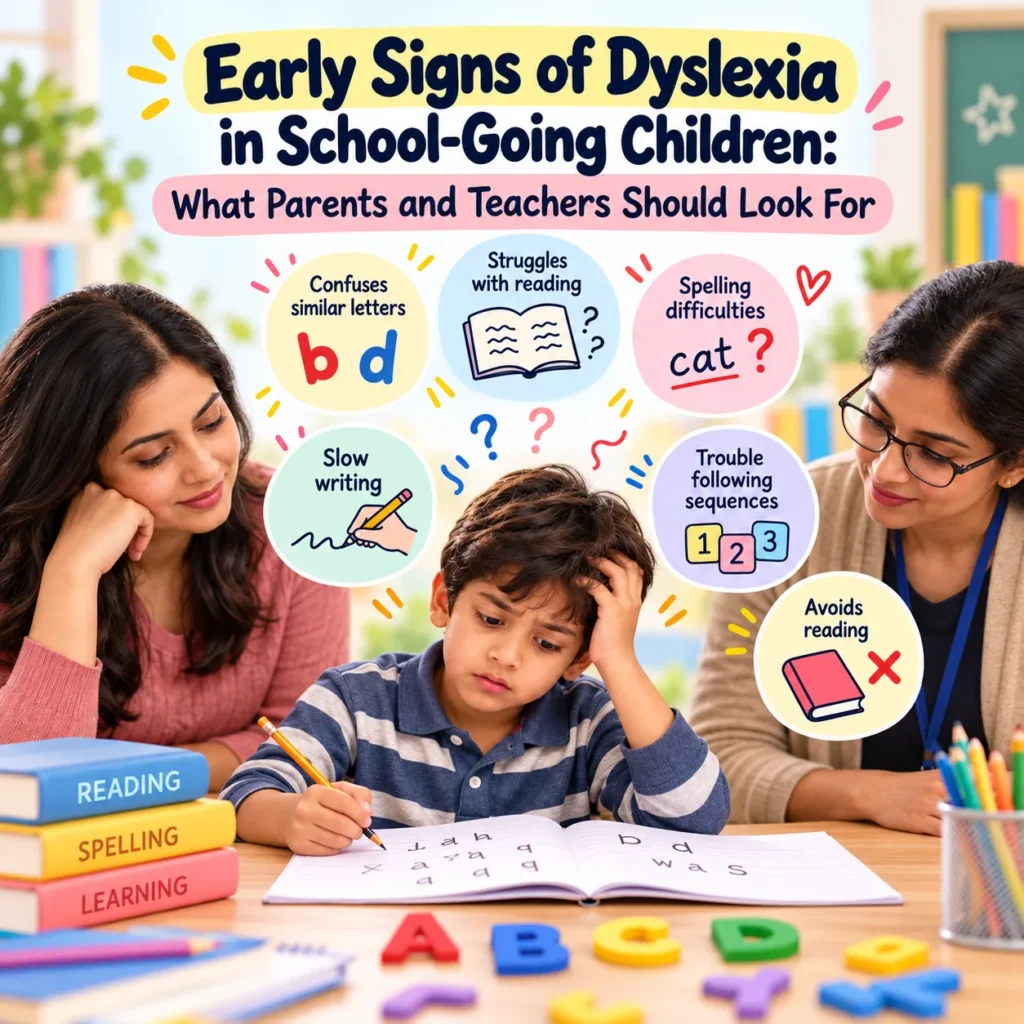
Early Signs of Dyslexia in School-Going Children: What Parents and Teachers Should Look For

A child who speaks well and follows everything in class, but reads slowly, guesses at words, or avoids reading aloud, may be showing early signs of dyslexia. Parents often put it down to carelessness or too little practice, so it can go unnoticed until Grade 2 or 3. Dyslexia is a type of learning disability, and support works better when it starts early. Dyslexia makes it hard to connect letters with the sounds they stand for. Reading and spelling suffer, and writing often does too.
“Dyslexia does not reflect a child’s intelligence. Recognising the signs early can help families and schools provide the right learning support before confidence begins to suffer.”
— Dr. Prakhar Jain, Psychiatrist in Mumbai
Reading and Spelling Signs Parents Notice at Home
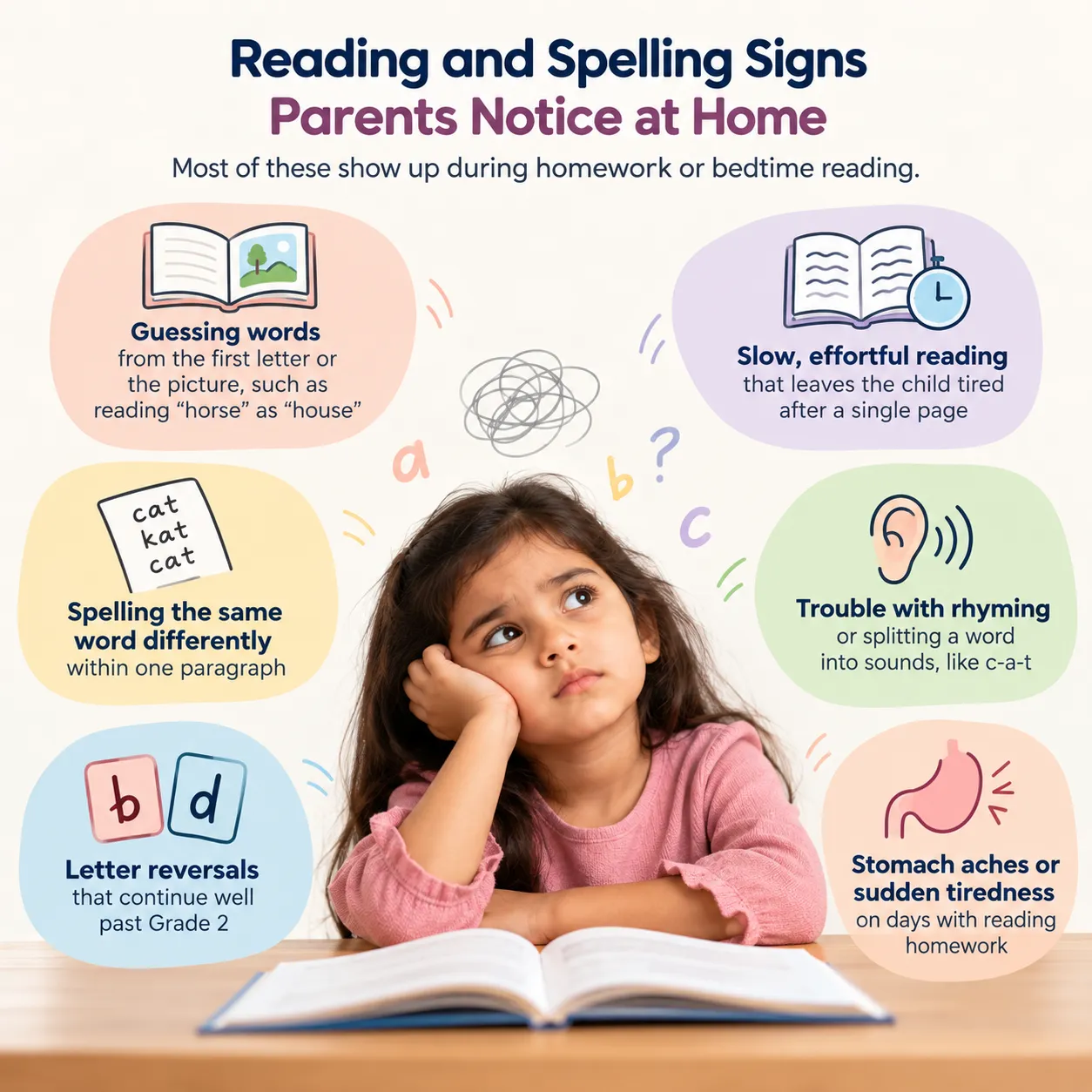
Reading and spelling difficulties can become noticeable during everyday homework or reading activities. Signs such as guessing words, slow reading, inconsistent spelling, letter reversals, or avoiding reading may indicate that a child needs extra learning support.
Noticing persistent reading or spelling difficulties in your child? An early developmental assessment can help understand their learning needs and identify the right support.
What Teachers See in the Classroom
Loses Place While Reading
Tap to read
Skips lines or uses a finger to stay on track.
Strong Verbal, Weak Written Work
Tap to read
Speaks well but struggles with spelling and written sentences.
Slow Board Copying
Tap to read
Takes longer than classmates to copy classroom notes.
Difficulty Across Languages
Tap to read
Finds switching between English, Hindi, and Marathi challenging.
Teacher Notices the Gap
Tap to read
Learning differences become clearer when compared with classmates.
“When a child consistently struggles with reading or spelling despite regular teaching, an assessment can help identify the reason and guide appropriate support.”
— Dr. Prakhar Jain, Psychiatrist
Signs That Are Easy to Miss: Memory, Handwriting and Behaviour
Some signs have little to do with reading. Many children with dyslexia struggle to hold sequences in memory: days of the week, months, multiplication tables. Handwriting is slow or untidy, and school bags are usually a mess.
Behaviour is the other giveaway. One child becomes the class clown to avoid being asked to read. Another goes quiet. A third simply refuses homework.
Concerned about your child’s progress at school? A detailed evaluation can help clarify learning challenges and guide parents and teachers on the next steps.
Why Some Children Are More Likely to Have Dyslexia
Dyslexia has no single cause, but some factors raise the chances:
- Family history.
- Premature birth or low birth weight.
- Early language delay
- Coexisting ADHD.
- Exposure to nicotine, alcohol, or drugs during pregnancy
None of this means a child will have dyslexia, and plenty of children with dyslexia have no risk factor at all. A family history is a reason to watch closely, not a reason to worry.

How a Child Is Assessed for Dyslexia
A child’s neurodevelopmental assessment begins with a detailed history: milestones, family history, school reports, and how the child behaves at home. Hearing and vision are checked so that other causes of poor reading aren’t missed.

Support That Helps Once Dyslexia Is Identified
Dyslexia is lifelong, but how a child copes with it changes a great deal with the right help. Progress varies from child to child, and no one can promise a timeline.
- Structured literacy teaching from a special educator, built around sounds and spelling patterns
- Speech and language therapy where sound processing is weak
- School accommodations: extra time, oral answers, questions read aloud
- Behavioural therapy and emotional support where confidence has taken a hit
- Treatment for coexisting ADHD or anxiety, decided case by case by the doctor
Frequently Asked Questions
What are the first signs of dyslexia in a school-going child?
Guessing at words, slow reading, inconsistent spelling, and avoiding reading aloud are the most common early signs of dyslexia.
At what age can dyslexia be diagnosed in children?
A formal dyslexia assessment is often possible from early primary school, though risk signs can appear earlier and timing varies.
Is dyslexia in children a sign of low intelligence or laziness?
Neither; dyslexia is a neurological learning disability and has no link with intelligence or effort.
Can a child with dyslexia learn to read well with the right support?
Most children improve with early, structured reading support, though the pace differs and results vary by individual.
How is dyslexia different from ordinary difficulty in learning to read?
Ordinary beginners catch up with practice, whereas children with dyslexia keep struggling to match letters to sounds despite good teaching.