Can Therapy Alone Treat Depression Without Medication?
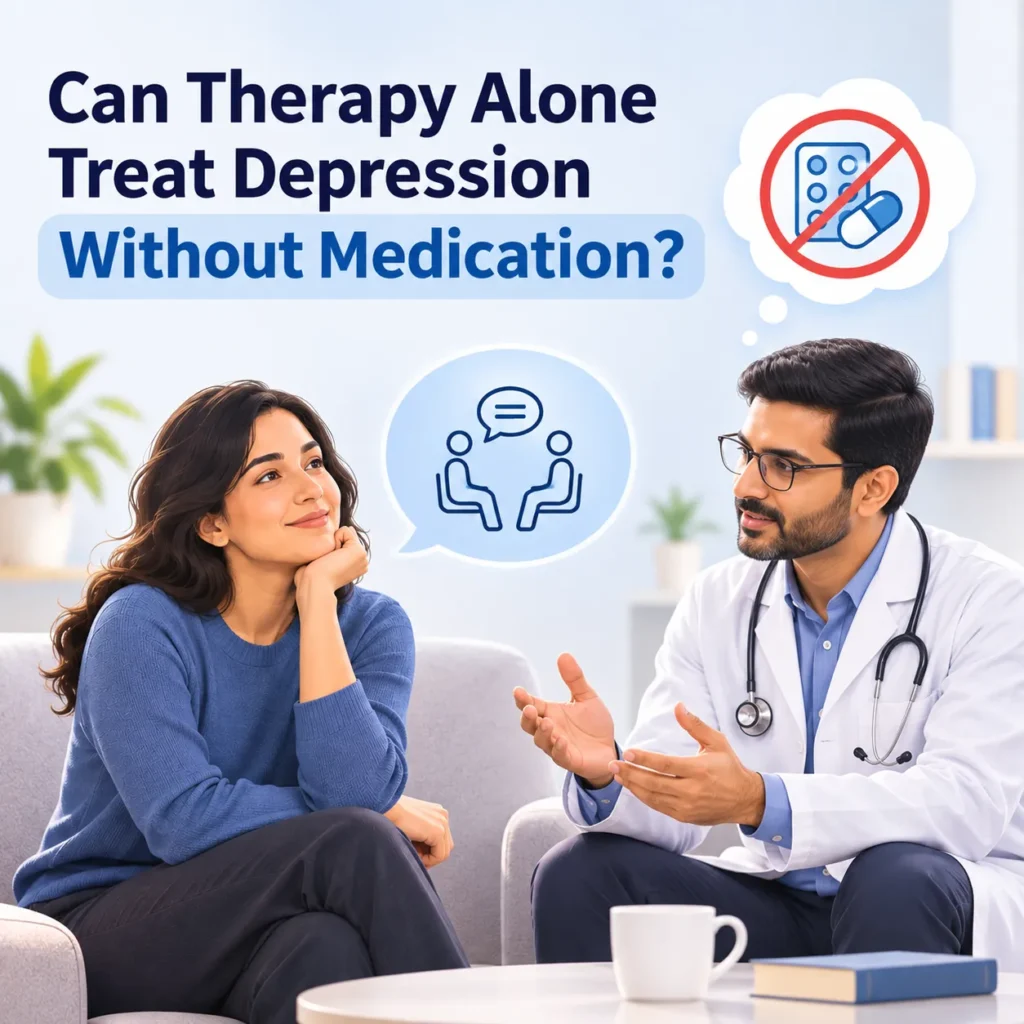
Depression is diagnosed when low or irritable mood, or the loss of interest in typical activities, is present most of the time, almost every day, for at least two weeks, and is accompanied by changes in sleep, appetite, energy, or concentration, among other things. One of the questions that many people have is whether or not they can get depression treatment without any pills. For some, it can. Others need treatment in addition to therapy.
Depression treatment varies depending on individual needs and symptom severity. A professional assessment can help determine whether therapy alone or combined treatment is suitable.
How depression is classified: mild, moderate and severe

“Therapy can be effective for many people with mild to moderate depression, but the right treatment depends on symptom severity and individual needs.” Dr. Prakhar D. Jain
Symptoms and who may be affected

Teenagers, adults, and older people can get depressed. It has been seen to happen after a loss, long-term stress, long-term illness, or in the presence of a family history. Using an online depression symptom
checklist can help you collect symptoms without making a diagnosis before an appointment.
Treatment options: psychotherapy, medication, combined approaches and lifestyle support
Treatment depends on symptom severity, medical history, and individual needs.
- Common Treatment Options
- CBT: Helps manage negative thought patterns and behaviours.
- Interpersonal Therapy: Addresses relationship difficulties and emotional challenges.
- Behavioural Activation: Encourages meaningful activities and daily routines.
- Antidepressants: Help regulate brain chemical signalling and improve symptoms.
- Combined Treatment: Therapy and medication, often recommended for severe depression.
- Lifestyle Support: Regular exercise, adequate sleep, and balanced nutrition support recovery.
- Advanced and Supportive Options
- TMS Therapy: Uses magnetic pulses to stimulate specific brain areas.
- tDCS: Uses mild electrical stimulation; effectiveness is still being studied.
- Ketamine Therapy: May help in treatment-resistant depression under medical supervision.
- Pharmacogenomic Testing: Helps inform medication selection based on genetic factors.
- Polysomnography: Identifies sleep disorders that may contribute to depressive symptoms.
Not sure whether therapy alone is enough to manage your depression? A professional assessment can help clarify your condition and identify treatment options suited to your needs.
When therapy alone may be considered, and its limitations

“Depression treatment doesn’t have to be a dichotomy between therapy and medicine; it’s about finding the method that helps achieve long-term healing and well-being.” Dr. Prakhar D. Jain
Are anxiety symptoms affecting your daily life? Seeking professional support can help you understand your symptoms and manage them effectively.
When to consult a registered doctor?
Assessment is appropriate when:
- low mood or loss of interest has lasted two weeks or more
- work, studies, sleep or relationships are affected
- earlier episodes have returned
- periods of unusually high energy or little need for sleep have occurred
- alcohol or other substances are being used to cope
Thoughts of self-harm are a reason to speak with a doctor or a helpline such as Tele-MANAS (14416) right away.
FAQs
1) Is it possible to get better from depression without taking drugs?
2) What are the adverse effects of antidepressants versus depression treatment?
3) What is the length of time required for depression treatment to be effective?
4) Who is not suitable for therapy to treat depression?
5) When to go to the doctor for depression?
Reference
Disclaimer: This blog is for educational and informational purposes only and should not be considered professional advice.
MBBS, M.D. (PSYCHIATRY), PDF, EMH (USA)
Child & Neuro Psychiatrist.
Dr. Prakhar Jain is a Psychiatrist in Mumbai, and has an experience of more than 13 years in this field. Dr. Prakhar Jain practices at Breach Candy Hospital, Bombay Hospital & Grace Medical Centre in Mumbai. He completed MBBS from Indira Gandhi Government Medical College, Nagpur and M.D. (Psychiatry) from Grant Medical College and Sir JJ Hospital, Mumbai.