Mobile Phone Addiction: Recognizing the Signs and Breaking the Cycle
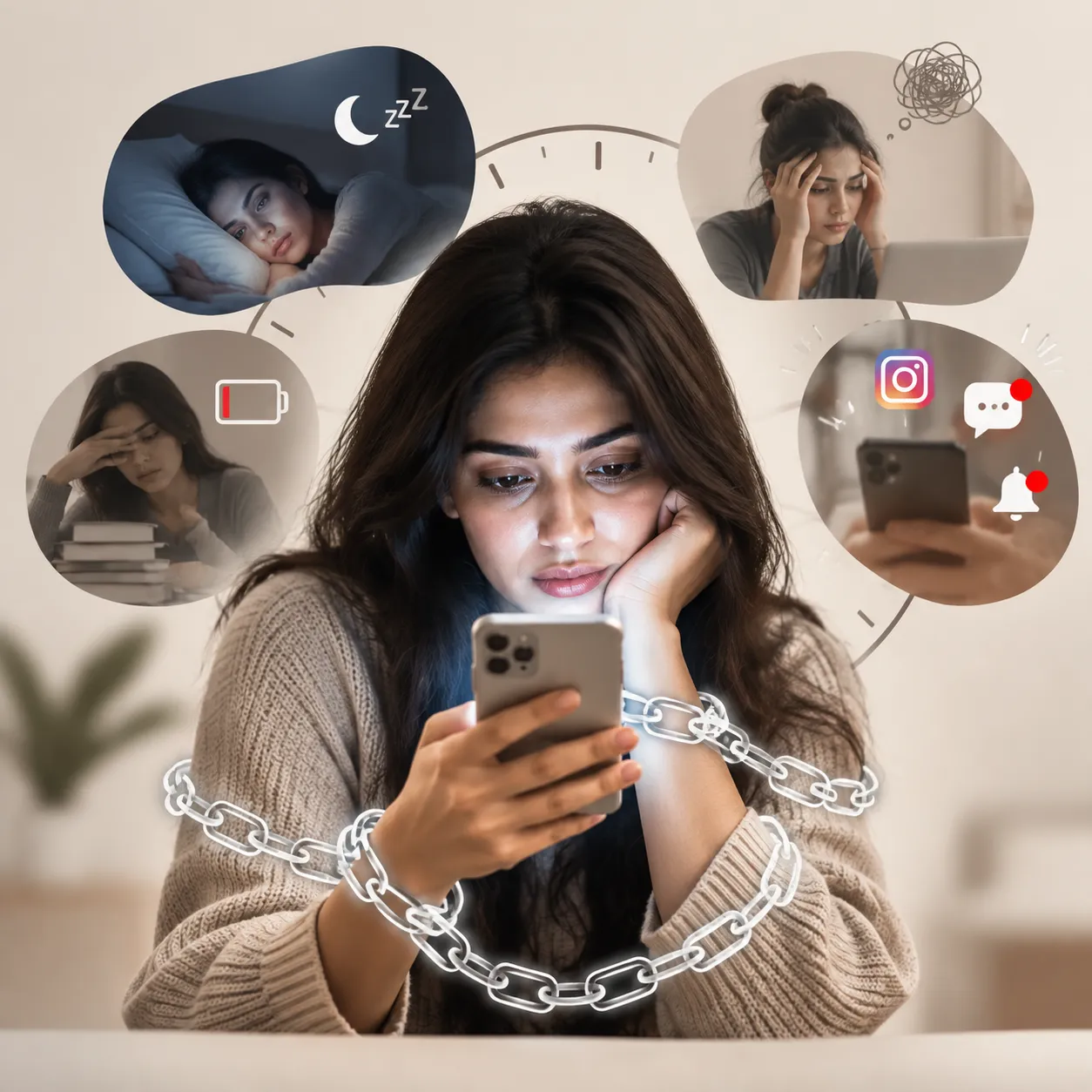
Phone checking is rarely the reason someone seeks professional help. More often, people come in because their sleep has become irregular, they feel more irritable than usual, or their focus at work has started slipping. During conversations, the role of excessive phone use often becomes clear.
Many people don’t recognize it as a habit that needs attention until it starts affecting their daily life, relationships, or emotional well-being.
What Counts as Phone Addiction vs. Normal Phone Use?

Using a phone frequently does not always mean addiction. The difference lies in whether the usage is a conscious choice or feels difficult to control.
Some common signs of problematic phone use include:
- Loss of control:Repeatedly trying to reduce phone usage but finding it difficult to maintain.
- Constant preoccupation:Frequently thinking about checking the phone even when it is not needed.
- Impact on daily life:Phone use begins affecting work, sleep, personal responsibilities, or relationships.
- Irritability without access:Feeling restless, anxious, or uncomfortable when the phone is unavailable.

How Constant Screen Time Affects Sleep, Focus, and Mood

Excessive phone use often begins with small habits that go unnoticed.
Constant checking, phantom vibrations, battery anxiety, and endless scrolling can gradually affect daily routines and mental well-being.
Recognising these early signs can help build healthier screen habits.
Early Warning Signs of Excessive Phone Use
Sleep Disruption:
Late-night scrolling keeps the brain active and makes it harder to relax before sleeping. Notifications, videos, and continuous content can delay the natural sleep process.
Reduced Focus and Attention:
Frequently switching between apps, messages, and tasks trains the brain to seek constant stimulation, making it harder to concentrate on important activities.
Increased Stress and Low Mood:
Continuous screen exposure may contribute to mental fatigue, increased stress levels, reduced productivity, and difficulty staying emotionally present.
Difficulty Disconnecting:
Constant digital stimulation can make it challenging for the mind to slow down and take proper breaks.
“Excessive phone use is often not just about screen time. It can affect sleep, attention, and emotional balance, which are important parts of overall mental well-being.”
— Dr. Prakhar Jain, Psychiatrist
Practical Steps to Reduce Screen Dependency

Small daily changes can help reduce screen dependency and create healthier digital habits.
Keeping boundaries around phone use, notifications, and screen-free moments can improve focus, sleep, and overall well-being.
Small changes in daily habits can help you build a healthier relationship with technology.
Understand your screen patterns and take steps towards better digital balance.
When Phone Use Becomes More Than a Habit
Using the phone as an emotional escape:
Excessive phone use may sometimes be a way of coping with anxiety, stress, loneliness, or low mood.
Avoiding uncomfortable feelings:
Constant scrolling or checking the phone to escape difficult emotions may indicate a deeper concern beyond screen habits.
Behavioral addiction patterns:
Compulsive phone use can involve reward and avoidance cycles that make reducing usage more challenging.
Impact on daily life:
If phone habits start affecting sleep, work, relationships, or emotional well-being despite efforts to cut down, professional support may help identify the underlying causes.
“The goal is not to eliminate technology from life, but to understand the patterns behind phone use and build healthier ways to manage emotions and daily routines.”
— Dr. Prakhar Jain, Psychiatrist
Why Choose Dr. Prakhar Jain for Behavioral & Digital Wellness Support
Changing behavioral patterns requires more than general advice. It involves understanding whether phone dependency is a habit, a coping mechanism, or connected to deeper emotional concerns.
Dr. Prakhar Jain follows a structured, therapy-focused approach to help individuals understand behavioral patterns and address concerns related to anxiety, depression, and digital dependency.
Through personalised evaluation and evidence-based support, patients can work towards healthier digital habits while addressing the factors contributing to excessive phone use.
Understand your screen habits and take the right steps towards better digital well-being.
Frequently Asked Questions
Is mobile phone addiction a psychiatric condition?
It is studied under behavioral addiction patterns but is not a standalone diagnosis.
How much screen time is considered excessive?
The impact on sleep, work, and mood matters more than the number of hours.
Can phone use affect anxiety or depression?
Excessive use may be linked with anxiety and low mood.
How can I reduce phone dependency?
Start with small changes like limiting notifications and creating phone-free periods.
When should I consult a psychiatrist?
Seek support when phone use affects daily life, relationships, sleep, or emotional health.