Can Alcohol Cause Depression and Anxiety? Understanding the Connection

A drink at the end of a hard day feels like it helps. For many people, it does for about an hour. What follows afterward is where the trouble usually starts, and it’s rarely the story most people expect.
“Alcohol may provide temporary relief from stress or low mood, but repeated drinking can interfere with sleep, emotional regulation, and overall mental well-being. When these symptoms persist, it is important to look at both alcohol use and mental health together.”
— Dr. Prakhar D. Jain, Psychiatrist
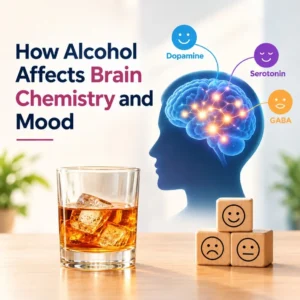
How Alcohol Affects Brain Chemistry and Mood

Alcohol affects two key brain chemicals:
- GABA — a calming chemical that alcohol boosts, which is why a drink feels relaxing at first
- Glutamate — an alertness chemical that alcohol suppresses, adding to that relaxed feeling
Once the alcohol clears the system, the effect reverses:
- The brain overcorrects, and glutamate spikes back up
- The calm evaporates faster than it arrived
- It’s often replaced by a low, unsettled mood that wasn’t there before the first drink
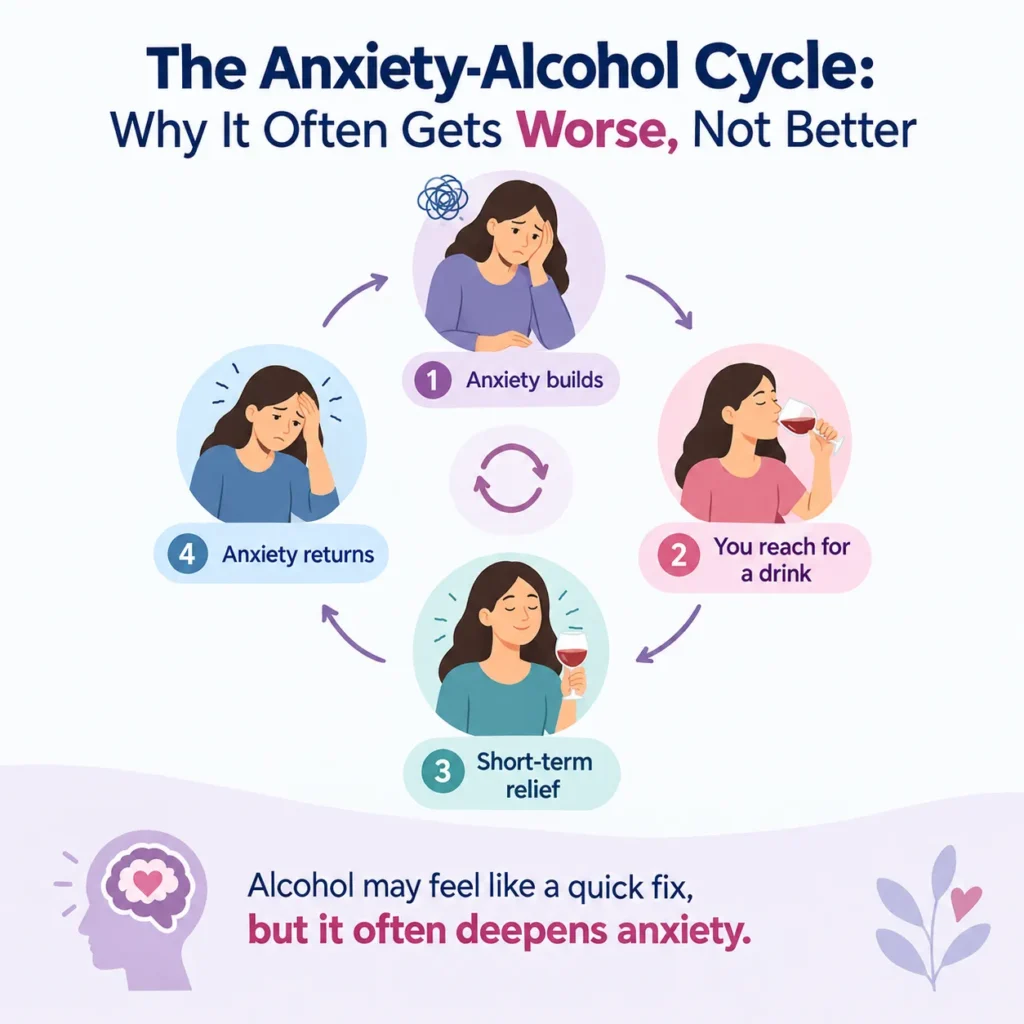
The Anxiety-Alcohol Cycle: Why It Often Gets Worse, Not Better

“Patients often start drinking to quiet anxious thoughts, but alcohol disrupts the same neurotransmitters that regulate anxiety once it wears off, so the next day’s anxiety is usually worse than the day before,” says Dr. Prakhar D. Jain, psychiatrist.

How Regular Drinking Can Trigger or Deepen Depression
None of this means every drinker will develop depression. But the more regular and heavier the drinking, the more these effects tend to compound rather than cancel out.
Concerned About Alcohol, Anxiety or Low Mood? Understanding the cause can help you take the right step.
Warning Signs Drinking Has Become Part of the Problem

Noticing that drinking has become a way to cope with low mood or worry is worth discussing with a professional.
Is Alcohol Affecting Your Mental Well-Being? Get the right guidance and support for your concerns.
When to Seek Professional Help

A rough week followed by a few extra drinks doesn’t automatically signal a disorder. What matters more is the pattern underneath it: drinking becoming the default response to a bad mood, or mood staying low well after the drinking itself has stopped.
Family history also plays a role here, and it’s not something most people think to mention. A parent or sibling with either a drinking problem or a mood disorder raises the odds meaningfully, which is one more reason a professional evaluation is worth it rather than guessing alone.

Treatment Options for Alcohol-Related Anxiety and Depression
- Integrated treatment — addressing the drinking and the mood symptoms at the same time, rather than treating one and waiting on the other
- Cognitive behavioral therapy (CBT) — works on both drinking triggers and depressive or anxious thought patterns
- Medically supervised detox — used when drinking has become heavy enough that stopping alone isn’t safe
- Medication, when appropriate, for depression or anxiety symptoms that persist independent of drinking
Frequently Asked Questions
1) Can drinking alcohol cause anxiety the next day?
Yes — many people experience heightened anxiety, sometimes called “hangxiety,” as alcohol’s calming effect wears off.
2) How much alcohol increases the risk of depression?
Regular heavy drinking, above moderate levels defined by health guidelines, is linked to a significantly higher risk of depression over time.
3) Does quitting alcohol improve anxiety and depression symptoms?
For many people, mood and anxiety improve within weeks of stopping, though symptoms can briefly worsen during withdrawal first.
4) Can occasional drinking still affect mental health?
Occasional drinking is less likely to cause lasting mood changes, but even moderate use can worsen sleep quality and next-day anxiety.
5) Is alcohol-induced depression a real, diagnosable condition?
Yes — substance-induced mood disorder is a recognized diagnosis when depression develops specifically in connection with alcohol use.