Your First Anxiety Attack: What It Feels Like and When to Seek Help
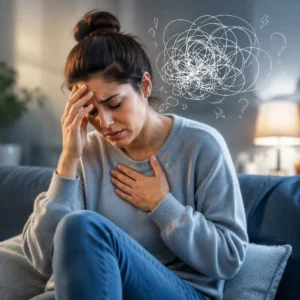
A first anxiety attack rarely announces itself. It can hit during a normal afternoon meeting, on a train, or while you’re lying awake at 2 a.m., and the confusion of not knowing what’s happening is often as unsettling as the physical symptoms themselves.
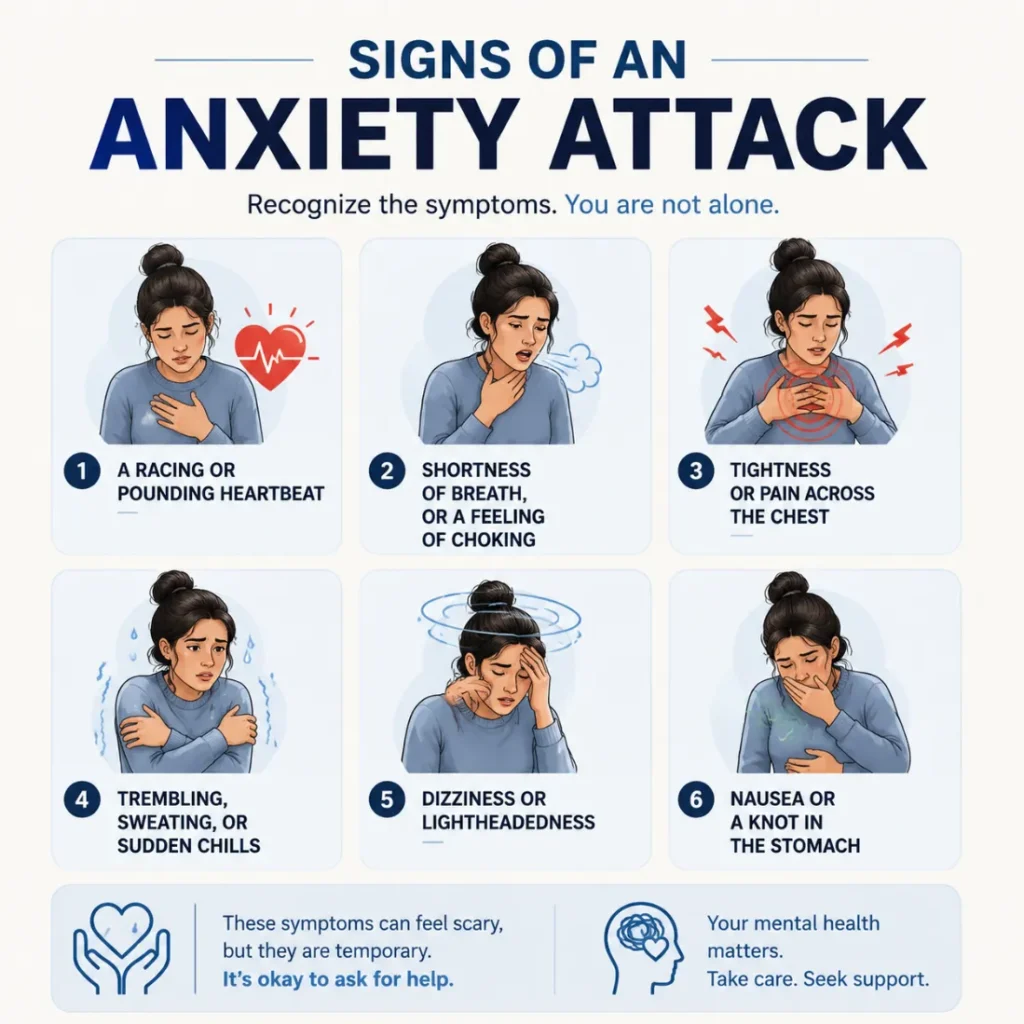
What an Anxiety Attack Actually Feels Like

The mental side can feel just as unsettling. Thoughts move faster than usual, and some patients describe a strange sense of detachment, as if watching themselves from a distance. Underneath it all sits a sudden, urgent fear that something is seriously wrong. None of this means anything is broken; it’s the nervous system reacting as if there were real danger, when there isn’t.
Not every attack shows up this strongly. Some patients notice quieter signs instead: tingling fingers, flushed skin, or a stomach that suddenly feels off. These milder symptoms are just as real, and just as worth mentioning to a doctor.
Why It Can Feel Like a Heart Attack (And How to Tell the Difference)

This is the part that catches most first-timers off guard: chest pain, a racing heart, and breathlessness overlap so closely with heart attack symptoms that many first-time panic attacks end in an ER visit, and that instinct is right. Emergency evaluation is the safer first step.
Once a cardiac cause is ruled out, these clues help tell them apart:
- Location: Sharper, more localized pain, not a spreading pressure
- Timing: Peaks within 10 minutes, not gradual with exertion
- Trigger: Often follows stress or racing thoughts, not physical activity
“Chest pain from anxiety and chest pain from a cardiac event can feel identical in the moment, which is exactly why a first episode needs proper evaluation, not self-diagnosis,” says Dr. Prakhar D. Jain, psychiatrist.
If chest pain shows up for the first time, get it checked by a doctor before assuming it’s anxiety. That’s not a step worth skipping.
What Triggers a First Anxiety Attack

A first attack rarely comes out of nowhere, even when it feels that way in the moment. Something usually shifts in the days or weeks before it: poor sleep, mounting stress, or the body simply running on empty for too long. A few patterns show up often enough in patients to be worth naming
What to Do in the Moment

There’s no way to stop an attack the second it starts, but a few things reliably shorten it:
- Slow, extended exhales — 4 counts in, 6 counts out. Helps the body calm down faster.
- 5-4-3-2-1 grounding — name 5 things you see, 4 you touch, 3 you hear, 2 you smell, 1 you taste. Brings the mind back to the present.
- Name it out loud — “This is anxiety; it will pass.” Breaks the cycle of worry and fear.
- Stay where you are when it’s safe to. Leaving can make anxiety worse.
When to See a Doctor About Anxiety Attacks

A single attack, on its own, doesn’t mean there’s an underlying disorder. What’s worth paying attention to is the pattern afterward: spending days dreading another attack, starting to avoid the place where it happened, or noticing that fear of another attack has begun shaping daily decisions.
A short anxiety self-assessment can help clarify whether what happened was an isolated stress response or something that’s been building for longer than it seemed.
A single frightening attack is reason enough to talk to someone, not just repeated ones.
Treatment Options That Actually Help

Cognitive behavioral therapy (CBT) is considered a first-line, evidence-based treatment for anxiety:
- Helps identify the connection between thoughts, emotions, and behaviors
- Builds practical coping strategies to manage anxiety symptoms
- Often reduces the frequency and intensity of attacks within a few weeks
Medication may be added when symptoms are frequent, severe, or affecting daily life — adjusted over time based on progress.
“Most first-time patients are surprised that structured CBT over a few weeks reduces both the frequency and intensity of attacks, often before medication is even needed,” Dr Prakhar Jain.
Anxiety disorders remain among the most common mental health conditions worldwide, and a first attack is often the moment people finally seek help not a sign that something is wrong with them, but a signal worth listening to.
Frequently Asked Questions
1) How long does a typical anxiety attack last?
Most anxiety attacks peak within ten minutes and fully subside within thirty, even without intervention.
2) Can an anxiety attack happen without any obvious trigger?
Yes — attacks can occur with no identifiable trigger, particularly when stress has been building gradually over weeks.
3) Is it normal to feel exhausted after an anxiety attack?
Feeling drained or foggy afterward is common, since the body has just run through a full fight-or-flight response.
4) Should I go to the ER during my first anxiety attack?
If it’s the first time and chest pain or breathlessness is present, an ER visit is the safer choice to rule out a cardiac cause.
5) Can one anxiety attack mean I have an anxiety disorder?
Not necessarily — a single episode is different from panic disorder, which involves recurrent, unexpected attacks and ongoing fear of the next one.
References:
- https://www.nhs.uk/mental-health/conditions/panic-disorder/
- https://www.apa.org/topics/anxiety/disorders
- https://www.mayoclinic.org/diseases-conditions/panic-attacks/symptoms-causes/syc-20376021
Disclaimer: This blog is for general information only and isn’t a substitute for professional psychiatric advice.